Stop Fighting Sandy Soil — Hold the Water Where the Roots Actually Are
By James K. Franz · Nov 24, 2026 · 2 min read
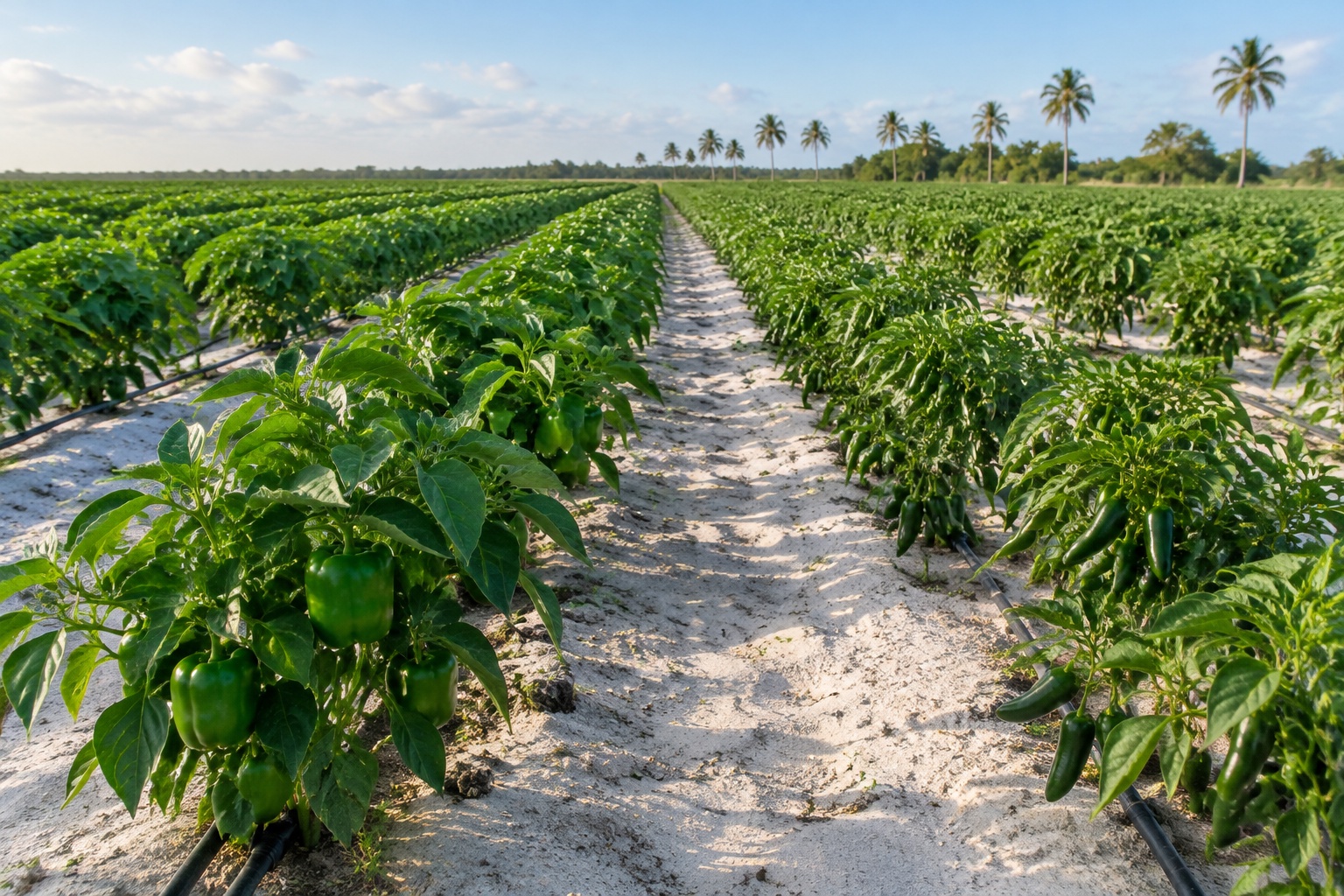
Reading Michele Katsaris's September 9 Growing Produce profile of Chuck Obern at C&B Farms in Clewiston, Florida, one thing jumps right off the page: he's a guy who actually goes out and tests things. Farming roughly 2,600 acres of vegetables and herbs on Florida sand is a constant battle with gravity. You irrigate, you feed the crop, and half of what you just paid for disappears straight past the root zone before the plant ever gets a crack at it. Most operations end up in permanent firefighting mode — pumping more water, adjusting schedules, chasing moisture that's already gone.
That is the exact problem RainVault™ was built to stop at the root cause. Instead of pouring more water onto ground that can't hold it, RainVault™ installs a permanent subsurface membrane right beneath the root zone, turning loose sand into a working reservoir for both rainfall and irrigation. In published sandy-soil trials, that simple change produced 34% higher yields on green peppers and 21% higher yields on jalapeños — two crops C&B Farms already grows. No pumps, no valves, and no maintenance once it's in the ground.
Of course, nobody who has farmed 2,600 acres should take a brochure's word for it, especially in South Florida where heavy downpours make drainage just as important as retention. The right move is the same one that works in any operation: run a small, honest side-by-side trial on a single block. Measure water applied, root-zone moisture, drainage after a big rain, and marketable yield at harvest. Let the ground and the numbers settle the argument.
See what holding water at the roots is worth on your ground.
Try the yield calculator